Cable Technology
Shielded vs Unshielded Twisted Pair: How to Choose for Your Network
Created on 2026.10.22
Choosing between shielded and unshielded twisted pair cable is one of the first decisions in any structured cabling project, yet it is often driven by habit rather than by the electrical environment the cable will actually live in. The two families differ in far more than price: their construction, their behaviour under electromagnetic interference (EMI), their grounding requirements and their installation effort all change the engineering work around them. This comparison walks through the technical differences, lays them out side by side, and closes with a selection checklist you can apply directly to a project.
Construction: where the difference begins
Unshielded twisted pair, usually written U/UTP, relies on nothing more than the twist itself. Each pair is twisted at a different rate so that the electromagnetic fields of the two conductors cancel each other, which suppresses differential-mode crosstalk between pairs. There is no metallic layer anywhere in the cable.
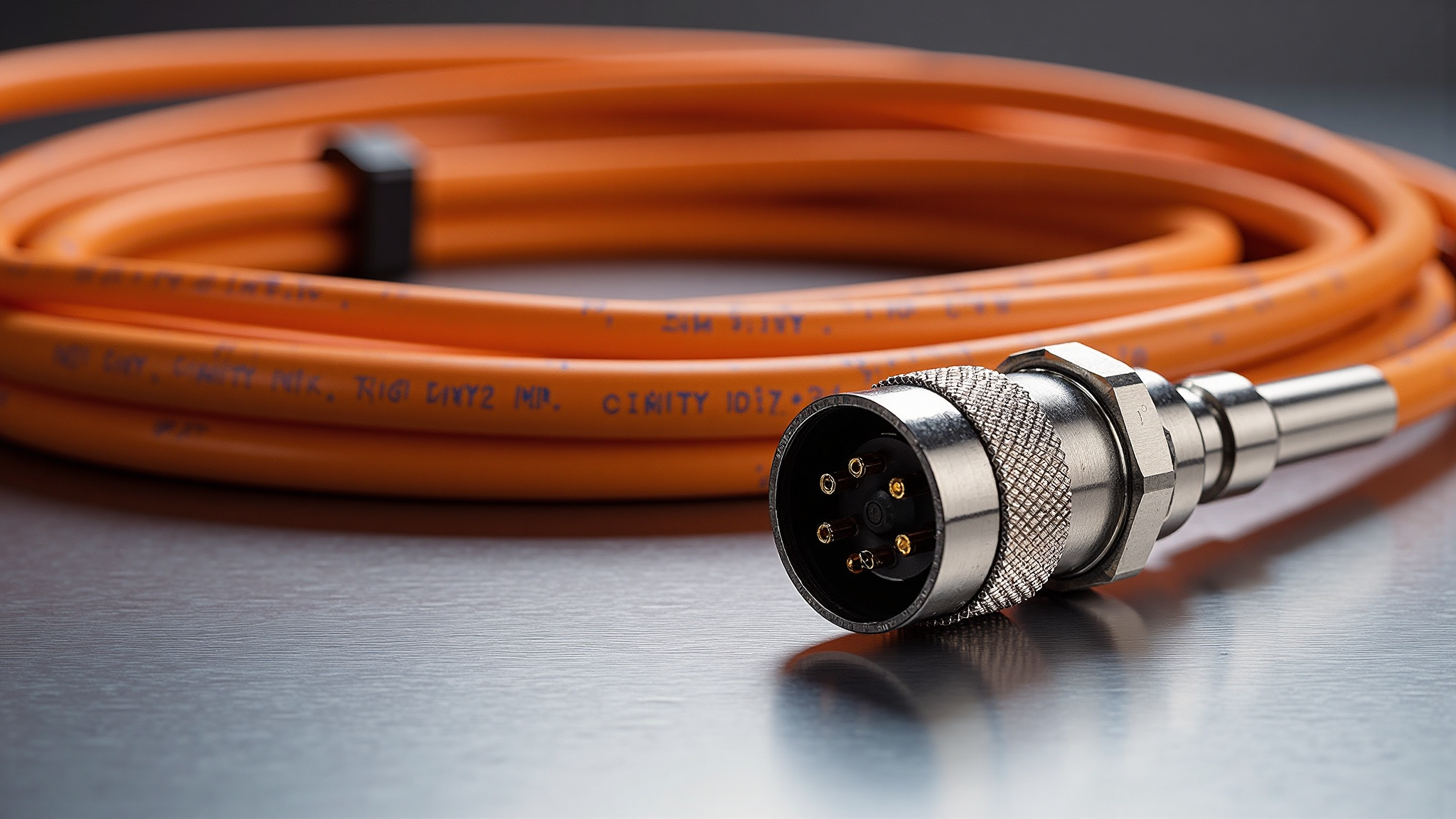
Shielded constructions add one or more conductive layers around the pairs, the cable core, or both. In an STP (screened twisted pair) design, an individual foil screen wraps each pair and an overall braid or foil often wraps the whole bundle. In an FTP (foiled twisted pair) design, a single overall foil covers all four pairs but the pairs themselves are unscreened. Hybrid variants exist, and the exact naming conventions vary between manufacturers, so the datasheet matters more than the acronym.
That added layer gives the cable a controlled path for interference. It also introduces a new requirement: the screen only works if it is properly bonded to ground at the intended points.
Immunity to EMI and crosstalk
The shield intercepts external electromagnetic fields before they reach the signal conductors and shunts the induced current to ground. This is why shielded cable performs noticeably better near variable-frequency drives, servo amplifiers, welding equipment, transformers and other sources of strong broadband noise. In these environments the shield can be the difference between a stable link and intermittent packet loss that is very hard to diagnose.
Unshielded cable is not fragile, however. Balanced signalling and tight twists already reject a great deal of common-mode noise, and in a typical office, home or light-commercial space, U/UTP runs happily at Gigabit speeds over the standard 100 metre channel. The mistake is assuming the shield adds margin everywhere; in a quiet environment it mostly adds cost and a grounding obligation.
Grounding is not optional
A floating shield behaves like an antenna. It can couple noise into the very conductors it was meant to protect and, in the worst case, make performance worse than an unshielded cable. Correct practice is to bond the screen to the equipotential grounding system according to the installation standard, ensuring that both ends of the link are referenced to the same potential. On long runs between buildings, or between areas with different ground potentials, a direct bond can invite circulating currents, and galvanic isolation or a one-end bond strategy must be considered.
Rule of thumb: the shield is only as good as the ground it is tied to. If you cannot guarantee a proper, low-impedance bond, unshielded cable is often the safer choice.
Cost and installation effort
Shielded cable and its accessories cost more: the cable itself, shielded connectors and keystone jacks, and the patch panels and patch cords that preserve the screen through the whole channel. Installation also takes longer. Terminating a foil around a drain wire and folding a braid back over a connector is fiddly work, and a poorly terminated screen can fail continuity checks or create a partial shield that is worse than none.
The channel must be shielded end to end. Mixing an unshielded patch cord into a shielded run, or leaving one connector unshielded, opens a gap that defeats the screen. Budget the extra labour, not just the extra material.
Side-by-side comparison
| Dimension | Shielded (STP / FTP) | Unshielded (U/UTP) |
|---|---|---|
| Interference immunity | High; intercepts EMI before it reaches the conductors | Moderate; relies on balanced twist and common-mode rejection |
| Grounding requirement | Mandatory and standards-compliant; bad grounds degrade performance | None beyond normal equipotential bonding |
| Cost | Higher cable, connector and panel cost | Lower throughout the channel |
| Installation difficulty | Higher; careful screen termination and end-to-end continuity | Lower; standard punch-down and crimp practice |
| Typical scenario | Industrial floors, VFD and servo areas, welding shops, noisy long parallel runs | Offices, homes, schools, quiet commercial spaces |
When shielded cable is the right call
Reach for shielded cable when the electrical environment is genuinely hostile. That includes areas around variable-frequency drives and servo systems, welding and heavy-induction equipment, and any run that travels a long distance in parallel with power or motor cables, where coupling accumulates. It is also a sensible precaution when cable routing cannot avoid noisy zones, or when the installation must meet a specification that mandates screened cabling.
For offices, classrooms, retail floors and residential wiring, unshielded cable remains the pragmatic default. It is cheaper, faster to install, easier to certify and has decades of reliable service behind it in exactly these settings. Adding a shield without a noise source to justify it simply moves budget from useful places to unnecessary ones.
Selection checklist
- Identify the real noise sources near the cable route: drives, servos, welders, transformers, radio transmitters, or heavy machinery.
- Check whether the run shares a tray or conduit with power or motor cables, and for how long.
- Confirm you can provide a compliant, low-impedance ground bond at the intended points.
- Decide whether the whole channel can be shielded end to end, including patch cords and panels.
- Weigh the measured need against the extra material and labour cost of screening.
- If in doubt in a quiet environment, choose U/UTP; if in doubt in a noisy one, choose shielded and ground it properly.
Whichever family you select, buy from a supplier that publishes full electrical and construction data and terminate it to the applicable standard. The cable is only one part of a channel, and a well-chosen type installed badly will underperform a modest type installed well.